Great Blue Heron at Boyds Creek
Updated: Mar 5
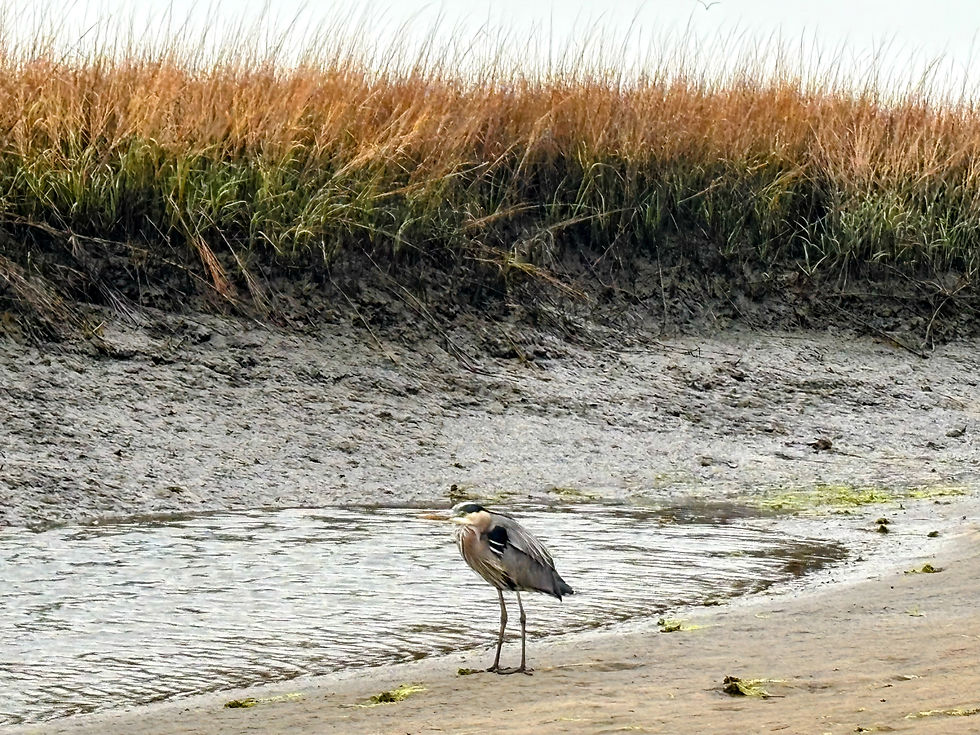
Great Blue Herons are common sightings in Lowcountry wetlands and waterways. They are found hunting in shallow waters standing quietly before striking. They are easily identified by their blue-grey feathers and long legs. The white head and black striping over the eye give Great Blue Herons a regal appearance.
Even when weathering a storm (as seen in the picture above), Great Blue Herons will tuck themselves protectively. Their characteristic wispy feathers will billow gracefully around them.
Do not let their gangly appearance fool you. They are quick to take flight.

Great Blue Herons tuck their necks in the characteristic "s" formation. In flight, their wings are rounded, and their legs are extended behind them. Great Blue Herons have wingspans averaging around 6 feet. They move quite efficiently and gracefully, in spite of their size.

Great Blue Herons stand between 4 and 5 feet tall. They are very aware of their surroundings, even if they remain statuesque in their silence. Observing Great Blue Herons in their natural environment is a definite perk of afternoon walks in the ACE Basin.
*For information on the nesting habits of Great Blue Herons, visit the Port Royal Cypress Wetlands and Rookery in Beaufort. It is definitely worth the drive with convenient parking and observation walkways.


Comments