The American Alligator in the Lowcountry
- cindyherrmedders
- Mar 16
- 2 min read

With warming weather, alligators are "waking up" from their brumation. Brumation, for those unaware, is simply the period of time where the alligators slow their metabolism - eating less and conserving energy - due to cold weather when water temperatures fall below 70 degrees.
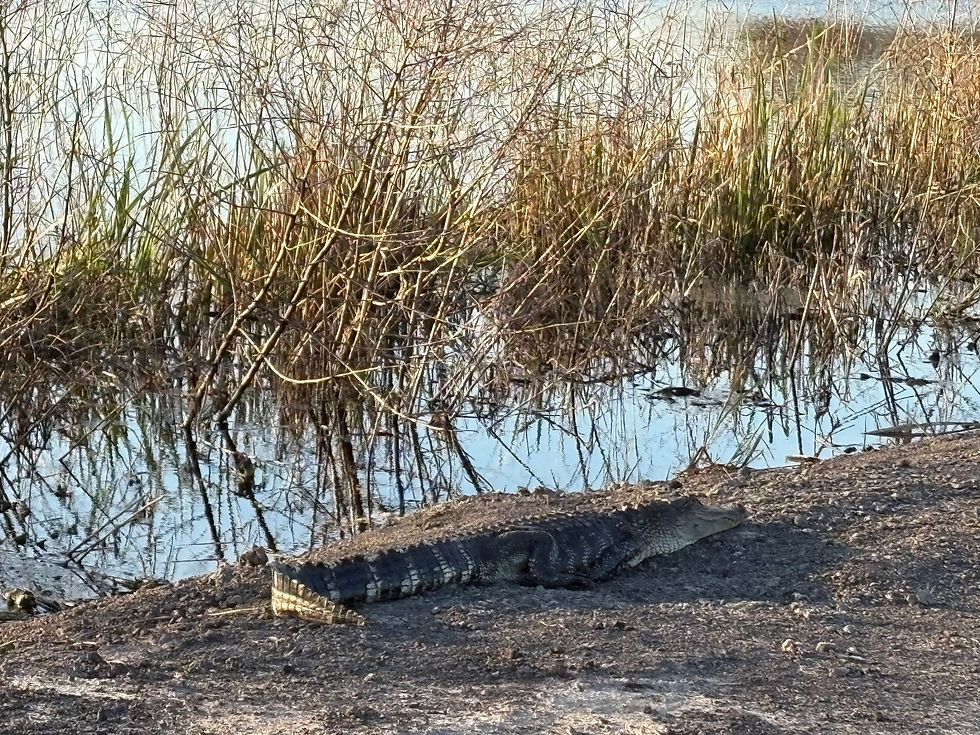
During this time, alligators are still active. Brumation is not hibernation. Alligators are still on the move, albeit slower. They can be found sunning themselves near any water source.

Alligators may be seen sleeping with only their heads or nostrils exposed while "logging" or, in layman's terms "floating in the water". Contrastly, they may also take a deep breath and sleep under the water resting on bed of the water source, surfacing at intervals for breaths of air. In either scenario, alligators are still very aware of their surroundings.

Alligators tend to stay close to water sources. Do not believe the myth that alligators are slow on land. They are only slower in colder weather when water temperatures drop below 70 degrees.
When walking or hiking in wetland areas or anywhere near water sources, pay attention to the area. Always assume there are alligators nearby. There typically are.

Alligator tracks are easily identifiable. Sand captures tracks well showing both direction and the drag tail marks. The tracks above indicate that the alligator is of fair size.
***Most of the ones I saw in the area averaged 6 to 6.5 feet in length. There were a few that were much larger between 14 and 15 feet.

At low tide, alligators will often move water sources. The foot impressions in the mud indicate multiple alligators, smaller in size than the one in the above photograph.

Paying attention to the embankment and looking for the claw marks, worn areas leading into the water or depressed grass are also good indicators of alligator activity.
Awareness makes walks safer and leads to less unexpected encounters.

The behavior of the alligator in the photograph above is common. He did not move and simply waited for me to pass. Look at the disturbed area around the tip of the tail. It shows the sweeping motion that the alligator use to move quickly. Their tails essentially launch them in a direction or into the water away from a perceived threat or in the direction of their prey. This momentum gives them incredible bursts of speed.
Alligators are APEX predators. In spite of the dangers, issues with feeding alligators to attract their attention have become problematic. Feeding American Alligators is not only a dangerous precedent but is also illegal in the South Carolina.
***I grew up in the South Carolina Lowcountry where the American Alligator often made their way into ponds, ditches or even yards, especially after storms and hurricanes. These pictures were taken as the alligators emerged of their brumation. They were slow and more interested in mating or eating.


Comments